
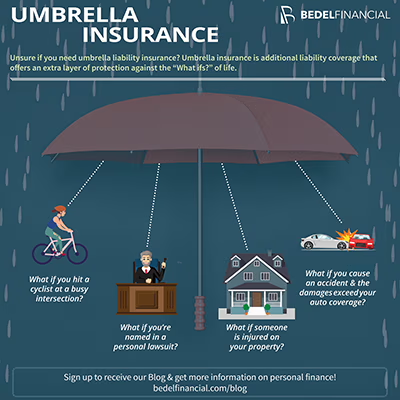
Most people believe that having “full coverage” on their car and a standard homeowners policy means they are fully protected from any financial disaster. Unfortunately, this is a dangerous misconception. Standard policies have “liability limits” that often fall far short of the judgements awarded in modern lawsuits.
Umbrella insurance is designed to solve this exact problem. It acts as an extra layer of liability protection that sits on top of your existing policies, providing a massive safety net when your primary coverage is exhausted.
1. How Umbrella Insurance Works: The Secondary Layer
To understand Umbrella insurance, you must first understand your “underlying limits.” Every auto or home insurance policy has a maximum amount it will pay for liability (usually between 100,000 and 500,000 dollars).
In a serious accident, if you are found liable for damages that exceed those limits, you are personally responsible for the difference. This is where Umbrella insurance kicks in.
Why Was My Insurance Claim Denied? How to Appeal the DecisionThe Mechanic: If you have a 300,000 dollar liability limit on your auto insurance and you are sued for 1 million dollars following a major accident, your auto policy pays the first 300,000 dollars. Without an Umbrella policy, you would have to pay the remaining 700,000 dollars out of your savings, home equity, or future wages. If you have a 1 million dollar Umbrella policy, it covers that 700,000 dollar gap in full.
2. What Does Umbrella Insurance Cover?
Umbrella insurance is unique because it often provides broader coverage than your standard policies, protecting you against risks that aren’t even mentioned in your home or auto insurance.
Bodily Injury Liability
This covers the cost of medical bills, rehabilitation, and lost wages for other people if you are responsible for an accident. This applies to car crashes, but also to incidents on your property, such as a guest falling down your stairs or a neighbor’s child being injured in your yard.
Property Damage Liability
This covers the damage you cause to someone else’s physical property. This isn’t just limited to cars; it could include damaging a building, a boat, or expensive landscape architecture.
International Health Insurance for Digital Nomads: A 2026 ComparisonPersonal Injury Coverage (The Digital Risk)
In 2026, this is one of the most important features. Umbrella insurance covers “Personal Injury” claims that standard home insurance often excludes, such as:
- Libel (written defamation).
- Slander (spoken defamation).
- False arrest or imprisonment.
- Malicious prosecution.
- Invasion of privacy. If you or your teenager makes a disparaging comment online that leads to a defamation lawsuit, an Umbrella policy is often your only line of defense.
Legal Defense Costs
Lawsuits are expensive. Even if you are not at fault, hiring a lawyer to defend you can cost tens of thousands of dollars. An Umbrella policy pays for your legal fees, and these costs are typically covered “in addition” to your policy limit, meaning they don’t eat into your 1 million dollars of protection.
3. What Is Not Covered?
While the coverage is broad, it is not infinite. Umbrella insurance typically excludes:
- Your own injuries: It is a liability policy, meaning it only pays for damage you cause to others.
- Your own property: If your house burns down, your homeowners insurance pays for it; the Umbrella policy does not add extra money for your own belongings.
- Business activities: If you are sued for a business-related incident, you need a commercial liability policy.
- Criminal acts: Coverage is voided if the damage was caused by a deliberate criminal act.
4. Who Truly Needs Umbrella Insurance?
While Umbrella insurance was once considered a “rich person’s” policy, the reality of 2026 is that anyone with assets or a future income stream should consider it. You may be at higher risk if you:
Understanding General Liability Insurance: A Simplified Guide for Beginners- Own a Home: Especially if you have significant equity.
- Own “Attractive Nuisances”: Swimming pools, trampolines, and hot tubs are high-risk zones for injuries.
- Have Teen Drivers: Drivers under 25 are statistically more likely to be involved in high-impact accidents.
- Own a Dog: Even friendly dogs can cause significant injury claims.
- Host Social Events: Frequent parties or gatherings increase the likelihood of a guest injury.
- Serve on a Board or Volunteer: Leadership roles in non-profits or HOAs can lead to personal liability.
- Own Rental Properties: Landlords are frequent targets for lawsuits.
5. The Cost-Benefit Analysis: 2026 Pricing
One of the most surprising things about Umbrella insurance is its affordability. Because it only pays out after your other policies are exhausted, the risk for the insurer is lower.
In the 2026 market, a 1 million dollar Umbrella policy typically costs between 300 and 600 dollars per year. For every additional million dollars of coverage, the price usually increases by only 75 to 100 dollars.
Compared to the cost of a single hour with a top-tier defense attorney, the annual premium for an Umbrella policy offers one of the highest returns on investment in the insurance world.
6. Requirements to Qualify
You cannot buy an Umbrella policy in isolation. Insurers require you to have “minimum underlying limits” on your home and auto policies first. Usually, this means:
No-Exam Life Insurance: Pros, Cons, and Who Should Apply- Auto Insurance: 250,000 per person / 500,000 per accident for bodily injury.
- Home Insurance: 300,000 for personal liability.
If your current limits are lower than these, you will need to increase them before you can add the Umbrella layer.