
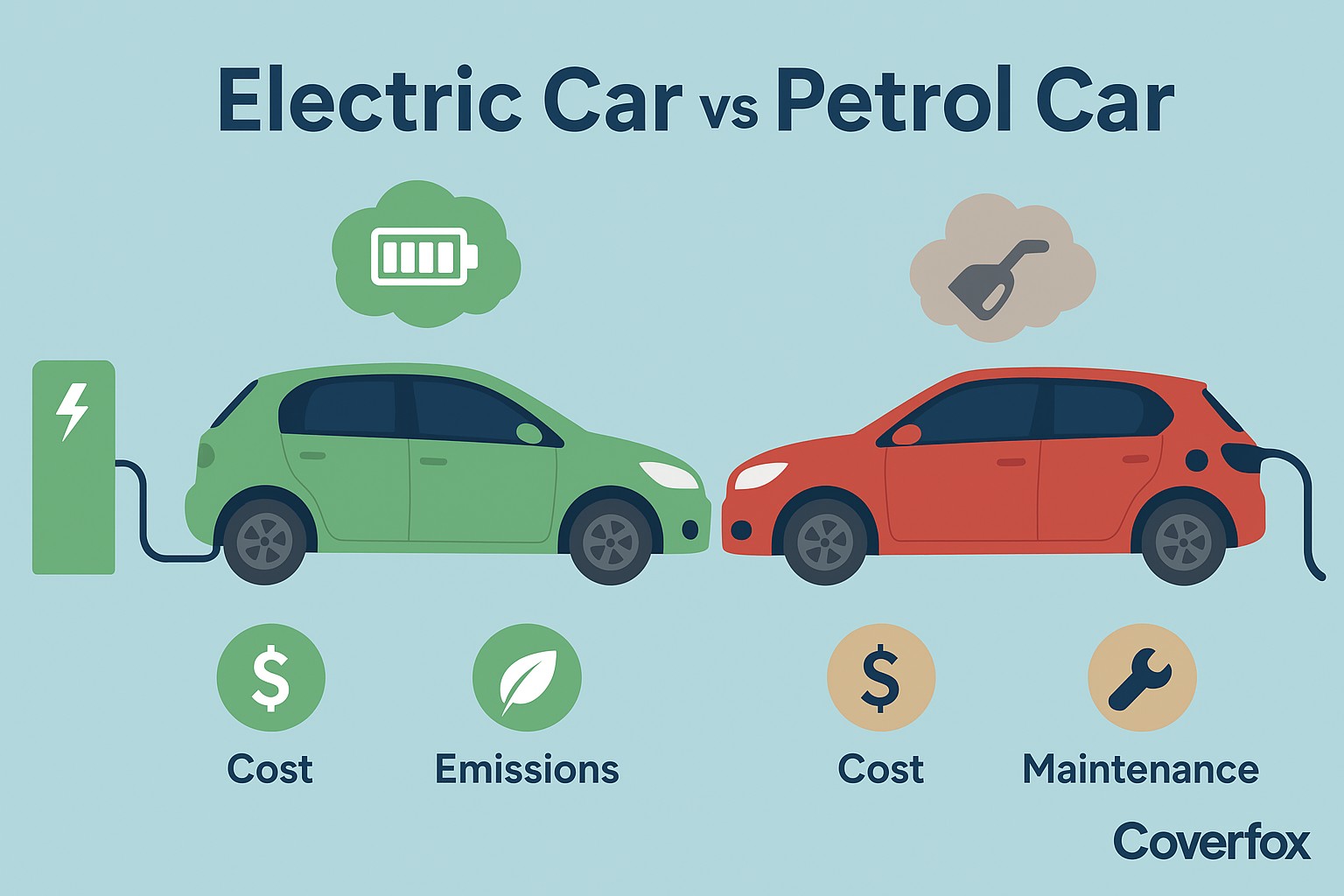
The transition from gasoline to electricity is more than just a change in fuel source; it is a fundamental shift in vehicle architecture, repair methodology, and risk assessment. For the insurance industry, EVs present a unique set of challenges that directly impact premium costs and coverage terms.
If you are considering making the switch or have recently purchased an EV, understanding these five pillars of EV insurance will help you navigate the market and avoid unexpected financial gaps.
1. Higher Premiums: The Cost of Innovation
Statistically, electric vehicles currently cost more to insure than their gasoline-powered counterparts. While this gap is narrowing in 2026 as parts become more available, several factors maintain the premium delta:
- Higher Purchase Price: Insurance is fundamentally a math problem based on the “Actual Cash Value” (ACV) of the asset. Because EVs generally have a higher Manufacturer’s Suggested Retail Price (MSRP) due to battery costs and advanced technology, the insurer’s potential payout in a total loss scenario is higher.
- Total Loss Threshold: In a gasoline car, a moderate collision might require a new bumper and radiator. In an EV, if the impact compromises the structural integrity of the battery pack, the vehicle is often declared a total loss. Insurers price their premiums to account for this lower threshold of “repairability.”
2. The Battery: A High-Value Component
The battery pack is the most expensive component of an EV, often accounting for 30% to 50% of the vehicle’s total value. This creates specific insurance nuances:
Small Business Insurance 101: What Every Entrepreneur Needs to Protect- Accidental Damage: Standard collision coverage handles battery damage resulting from an accident. However, insurers are increasingly looking at “underbody impact” claims—such as hitting debris on a highway that punctures the battery casing—which can result in a claim exceeding 20,000 dollars.
- Degradation vs. Damage: It is vital to note that insurance does not cover natural battery degradation (loss of range over time). This is a maintenance issue covered by the manufacturer’s warranty, not your insurance policy.
- Replacement Methodology: Because EV batteries are integrated into the chassis, replacing them requires specialized equipment and environments, further driving up the cost of claims.
3. Specialized Repair Networks and Labor
Repairing an EV is not the same as repairing a gas car. It requires a different set of certifications and facilities:
- High-Voltage Certification: Technicians must be trained to work safely around high-voltage systems. This specialized labor comes at a higher hourly rate, which is passed on to the insurer and, ultimately, the policyholder.
- Direct-to-Consumer Models: Many EV manufacturers (like Tesla, Rivian, or Lucid) use proprietary parts and authorized-only repair centers. This lack of third-party competition for parts and labor can lead to longer repair times and higher costs compared to a Ford or Toyota where aftermarket parts are plentiful.
4. Charging Infrastructure and Liability
A unique aspect of EV ownership is the home charging station. This introduces a crossover between auto and homeowners insurance:
- Wallbox Coverage: If your home charging station is damaged in a fire or stolen, it may be covered under your homeowners insurance as a “permanent attachment” to the property. However, if you damage the charger with your car, your auto insurance’s property damage liability might not apply to your own property.
- Public Charging Liability: When using public infrastructure, there is a risk of tripping hazards from cables or damage to the charging station. Most personal auto policies cover this liability, but it is a new risk vector that insurers are monitoring closely in 2026.
- Cable Theft: With the rising cost of copper, charging cable theft has become a common claim. Ensure your comprehensive coverage has a low enough deductible to make these claims viable.
5. Weight, Torque, and Kinetic Energy
The physics of an EV also play a role in risk assessment:
- Heavier Curb Weight: Due to the weight of the batteries, an EV is significantly heavier than a similarly sized gas car. In a collision, a heavier vehicle carries more kinetic energy, which often results in more severe damage to the other vehicle or property involved. This can lead to higher liability premiums.
- Instant Torque: EVs provide 100% of their torque instantly. For inexperienced drivers, this rapid acceleration can lead to “pedal misapplication” accidents in parking lots or stop-and-go traffic, which insurers categorize as a higher frequency risk for new EV owners.
Potential Savings: The “Green” Discount
It is not all high costs. In 2026, many insurers offer incentives to encourage the adoption of low-emission vehicles:
What Is Umbrella Insurance and Do You Really Need It?- Alternative Fuel Discounts: Some providers offer a 5% to 10% discount simply because the vehicle is electric.
- Telematics Integration: Since EVs are “connected cars” by design, they integrate seamlessly with usage-based insurance (UBI) programs. If you drive your EV safely and avoid late-night trips, you can offset the higher base premium with significant behavior-based discounts.
- Lower Maintenance Risk: Because EVs have fewer moving parts (no oil changes, no spark plugs, no transmission), they are less likely to experience certain types of mechanical failures that could lead to accidents, a factor that some forward-thinking insurers are beginning to credit.