
Professional liability insurance is one of the most important forms of protection for service-based businesses and professionals. Even if you provide excellent service, a client can still claim that your work caused financial harm, contained errors, missed deadlines, or failed to meet expectations.
Defending yourself against these allegations can be expensive—even if you did nothing wrong.
That’s why many businesses purchase professional liability insurance, also known as Errors and Omissions (E&O) Insurance. But how much does it cost in 2026?
In this guide, we’ll break down average professional liability insurance costs, explain the factors that affect premiums, and show how businesses can reduce their insurance expenses without sacrificing protection.
Errors and Omissions Insurance Explained for Freelancers and ConsultantsWhat Is Professional Liability Insurance?
Professional liability insurance protects businesses and professionals against claims arising from:
- Professional mistakes
- Errors and omissions
- Negligence
- Misrepresentation
- Missed deadlines
- Inaccurate advice
- Failure to deliver services as promised
Unlike general liability insurance, which covers bodily injury and property damage, professional liability insurance focuses on financial losses caused by professional services.
Who Needs Professional Liability Insurance?
Any business that provides expertise, advice, or professional services should consider professional liability coverage.
Common industries include:
How Much Life Insurance Do You Really Need? Coverage Calculator Guide (2026)Consultants
- Business consultants
- Marketing consultants
- Management consultants
Technology Professionals
- Software developers
- IT consultants
- Web designers
- Cybersecurity firms
Financial Professionals
- Accountants
- Tax preparers
- Bookkeepers
- Financial advisors
Healthcare Professionals
- Therapists
- Counselors
- Certain healthcare providers
Legal Professionals
- Attorneys
- Paralegals
Creative Professionals
- Graphic designers
- Content creators
- Marketing agencies
Real Estate Professionals
- Real estate agents
- Brokers
- Property managers
Even a small mistake can result in costly legal claims.
Average Professional Liability Insurance Cost in 2026
Professional liability insurance premiums vary significantly depending on the industry and risk level.
For many small businesses, average costs range between:
Monthly Cost
$40 to $150 per month
Best Health Insurance Plans for Self-Employed Professionals in 2026Annual Cost
$500 to $2,000 per year
However, businesses in high-risk professions may pay substantially more.
Professional Liability Insurance Cost by Business Type
| Profession | Average Monthly Cost | Average Annual Cost |
|---|---|---|
| Graphic Designer | $40–$70 | $500–$850 |
| Freelance Writer | $35–$60 | $450–$700 |
| Marketing Consultant | $50–$100 | $600–$1,200 |
| Accountant | $70–$200 | $850–$2,500 |
| IT Consultant | $75–$250 | $900–$3,000 |
| Software Developer | $80–$250 | $1,000–$3,000 |
| Real Estate Agent | $60–$150 | $700–$1,800 |
| Architect | $150–$500+ | $1,800–$6,000+ |
| Engineer | $150–$600+ | $2,000–$7,000+ |
| Financial Advisor | $150–$700+ | $2,000–$10,000+ |
High-risk professions generally face higher premiums due to the larger financial impact of potential mistakes.
Why Professional Liability Insurance Costs Vary
Insurance companies evaluate multiple factors when determining premiums.
Business Owner’s Policy (BOP) vs General Liability Insurance: What’s the Difference?1. Industry Risk
Your profession is often the biggest pricing factor.
Lower-Risk Businesses
Examples:
- Freelance writers
- Graphic designers
- Marketing consultants
These professions generally face lower lawsuit exposure.
Higher-Risk Businesses
Examples:
- Architects
- Engineers
- Financial advisors
- IT security firms
Mistakes in these fields can result in substantial financial damages.
As a result, premiums tend to be significantly higher.
2. Annual Revenue
Businesses with higher revenue generally face greater liability exposure.
Example:
A consultant earning:
$50,000 annually
typically presents less risk than a consulting firm generating:
$5 million annually
Higher revenue often leads to larger client contracts and larger potential claims.
3. Coverage Limits
The more coverage you purchase, the higher your premium.
Common limits include:
| Coverage Limit | Typical Cost Impact |
|---|---|
| $250,000 | Lowest |
| $500,000 | Moderate |
| $1 Million | Common |
| $2 Million+ | Higher Premium |
Most small businesses choose at least:
$1 million per claim
and
$1 million aggregate coverage
4. Claims History
Businesses with previous claims often pay more.
Insurance companies view prior claims as indicators of future risk.
Factors that may increase premiums include:
- Previous lawsuits
- Settlements
- Frequent claims
- Disciplinary actions
Maintaining a clean claims record can significantly reduce costs.
5. Business Experience
New businesses often pay slightly higher premiums.
Insurers may view newer firms as riskier due to:
- Limited operating history
- Fewer established procedures
- Less documented experience
Businesses with several years of successful operations may qualify for better pricing.
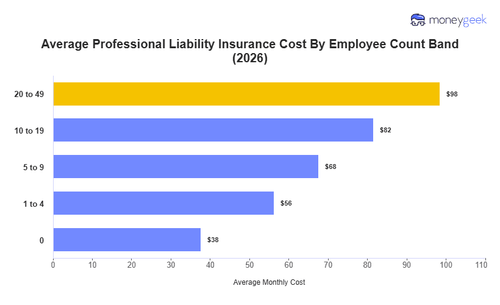
6. Number of Employees
More employees generally create more opportunities for mistakes.
A solo consultant typically pays less than a firm with:
- 10 consultants
- 25 employees
- Multiple office locations
Employee count directly affects exposure.
Claims-Made vs Occurrence Policies
Understanding policy structure is essential when comparing costs.
Claims-Made Policies
Most professional liability policies are claims-made policies.
Coverage applies when:
- The incident occurs after the retroactive date
- The claim is filed while the policy is active
Claims-made policies generally cost less initially.
However, coverage must remain active to maintain protection.
Occurrence Policies
Occurrence policies cover incidents that happen during the policy period, regardless of when the claim is filed.
These policies are:
- Less common
- More expensive
- Simpler to understand
Most professional liability insurance today is written on a claims-made basis.
What Does Professional Liability Insurance Cover?
Coverage often includes:
Professional Negligence
Failure to provide services according to professional standards.
Errors and Omissions
Mistakes made while performing services.
Legal Defense Costs
Attorney fees and court expenses.
Settlements
Covered settlement agreements.
Judgments
Court-awarded damages when covered by the policy.
Defense costs alone can exceed tens of thousands of dollars, making coverage valuable even if a claim is eventually dismissed.
What Professional Liability Insurance Does NOT Cover
Professional liability insurance is not a substitute for every type of business insurance.
Common exclusions include:
Bodily Injury
Covered under general liability insurance.
Property Damage
Typically covered by general liability policies.
Employee Injuries
Covered by workers’ compensation insurance.
Intentional Wrongdoing
Fraud and intentional misconduct are usually excluded.
Cyberattacks
Many businesses require separate cyber liability insurance.
How Much Coverage Do Small Businesses Need?
Coverage needs vary by industry.
General guidelines include:
| Business Type | Suggested Coverage |
|---|---|
| Freelancer | $250,000–$500,000 |
| Consultant | $1 Million |
| Marketing Agency | $1 Million |
| IT Consultant | $1–$2 Million |
| Accountant | $1–$2 Million |
| Financial Advisor | $2 Million+ |
| Architect | $2 Million+ |
Many clients require vendors to carry at least:
$1 million professional liability coverage
before signing contracts.
How to Lower Professional Liability Insurance Costs
Professional liability insurance can be expensive, but there are ways to reduce premiums.
Compare Multiple Quotes
Insurance pricing varies dramatically between providers.
Obtaining multiple quotes often produces substantial savings.
Increase Your Deductible
Higher deductibles typically reduce annual premiums.
However, ensure the deductible remains affordable if a claim occurs.
Maintain Strong Contracts
Well-written contracts can reduce legal disputes and improve insurability.
Include:
- Scope of work
- Deliverables
- Limitations of liability
- Payment terms
Improve Risk Management
Documenting procedures and maintaining quality control systems can reduce risk.
Examples include:
- Employee training
- Written workflows
- Client approval processes
Bundle Business Insurance Policies
Many insurers offer discounts when combining:
- Professional liability
- General liability
- Business owner’s policies (BOP)
Best Professional Liability Insurance Providers
Several insurers are popular among small businesses.
Hiscox
Best for freelancers and consultants.
Next Insurance
Excellent for online applications and small businesses.
The Hartford
Strong choice for professional service firms.
CNA
Well-known for professional liability coverage.
Travelers
Offers broad industry-specific options.
Chubb
Popular among larger professional firms.
Nationwide
Good for growing businesses.
Always compare multiple insurers before purchasing coverage.
Is Professional Liability Insurance Worth It?
For most service-based businesses, the answer is yes.
Consider this example:
A consultant signs a contract worth:
$20,000
The client later alleges poor advice caused:
$200,000 in financial losses
Even if the consultant ultimately wins the case, legal defense costs alone could exceed:
$30,000 to $50,000
Professional liability insurance helps protect against these expenses.
Frequently Asked Questions
How Much Does Professional Liability Insurance Cost Per Month?
Most small businesses pay between $40 and $150 per month, although high-risk professions may pay substantially more.
Is Professional Liability Insurance Required by Law?
Generally, no. However, many clients, contracts, licensing boards, and professional associations require coverage.
What Is the Difference Between Professional Liability and General Liability Insurance?
Professional liability covers financial losses arising from professional services, while general liability covers bodily injury and property damage claims.
Do Freelancers Need Professional Liability Insurance?
Yes. Freelancers can be sued for mistakes, missed deadlines, or alleged negligence just like larger businesses.
What Is the Cheapest Professional Liability Insurance?
Freelancers and low-risk consultants often find affordable coverage through providers such as Hiscox, Next Insurance, and The Hartford.
Final Thoughts
Professional liability insurance is a critical safeguard for businesses that provide advice, expertise, or professional services. While costs vary based on industry, revenue, claims history, and coverage limits, most small businesses can expect to pay between $500 and $2,000 annually for meaningful protection.
For consultants, accountants, IT professionals, marketers, designers, and other service providers, a single lawsuit can easily cost more than years of insurance premiums. By comparing quotes, choosing appropriate coverage limits, and implementing strong risk-management practices, businesses can secure affordable protection while safeguarding their reputation and financial future.
The bottom line: if your business earns money through professional knowledge or services, professional liability insurance is often one of the smartest investments you can make.